All Cat Demodicosis Treatment Protocols in One Place
Demodicosis, also known as subcutaneous mite infestation, is a globally widespread disease that is particularly challenging to treat in cats due to their sensitivity to prolonged therapy. Over the past 15 years, the approach to treatment has evolved with the introduction of effective and safe medications.
This article is based on the latest clinical guidelines of the World Association for Veterinary Dermatology (WAVD) .
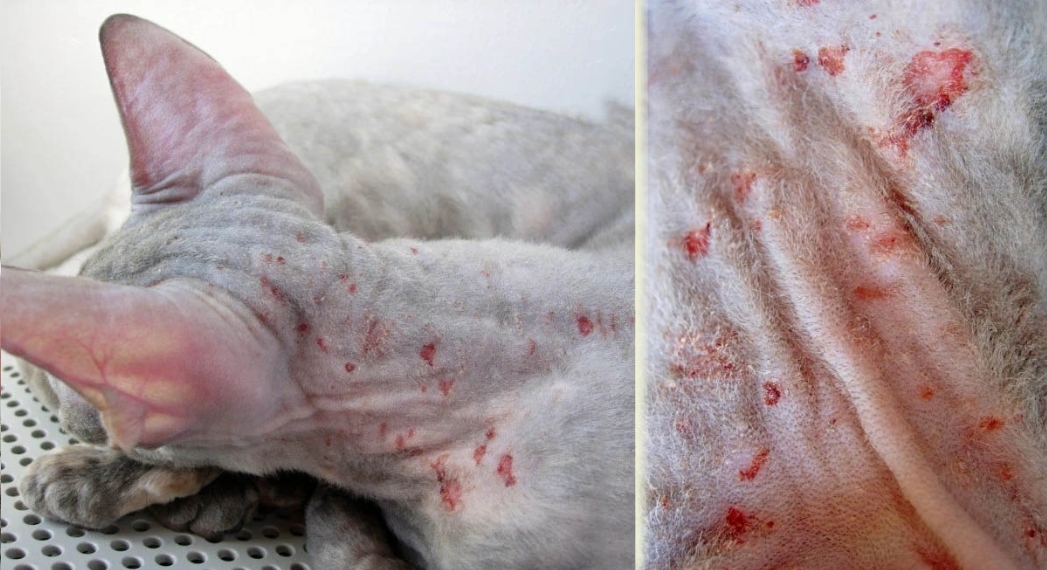
Causes and Development of Demodicosis
Demodicosis is caused by the excessive proliferation of mites from the Demodex genus, which normally inhabit the hair follicles of mammals without causing problems due to immune system control. In cats, these mites are transmitted from the mother to kittens during the first days of life. The disease—accompanied by severe itching, infected wounds, and alopecia—typically develops only in cases of weakened immunity (due to serious illnesses, immunosuppressive therapy, or genetic predisposition). In many cases, the mite population self-regulates; however, in more complex cases, veterinary intervention is required.
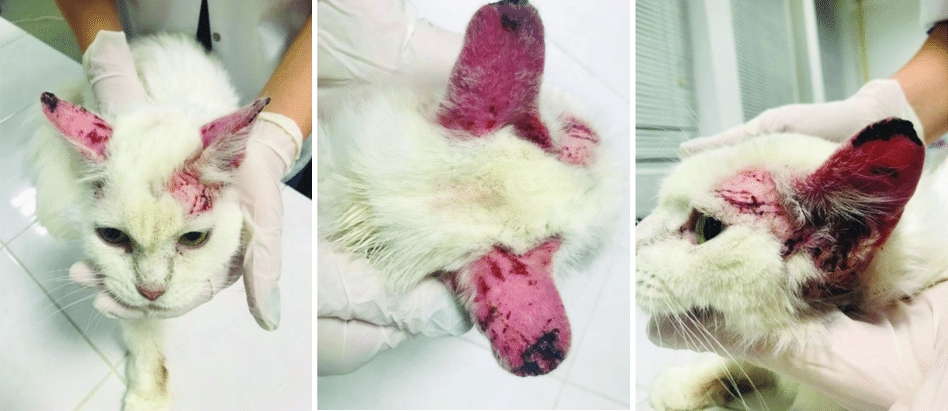
Medications for Treating Demodicosis
This section reviews current medications along with internationally accepted dosages and application recommendations, including protocols for home treatment.
Amitraz
Amitraz is the only formamidine used in veterinary medicine. As a leave-on solution, it was long the primary treatment for various acariases—including demodicosis. It remains the most accessible and widely used parasiticide with good tolerability. The substance acts as a monoamine oxidase inhibitor and an alpha-2 adrenergic receptor agonist, helping to reduce inflammation and suppress mite activity.
Dosages and Application Methods
Amitraz is typically used in concentrations ranging from 0.0125% to 0.025%, with concentrations up to 0.1% permissible for small, localized areas in cases of good tolerance. It is applied once a week when used at lower concentrations or every two weeks for stronger solutions. Since amitraz is an oily liquid, an emulsifier is required for home preparation—a ratio of 20 ml glycerin per liter of water is sufficient for mixing.
To prepare a 0.0125% solution:
- Dilute 1 ml of 12.5% amitraz in 999 ml of warm water.
- Alternatively, for a smaller volume: mix 0.1 ml amitraz with 99.9 ml of water.
- Use an insulin syringe with 0.01 ml graduations for precise measurement.
Application Instructions:
- Trim the fur in the affected area for better access to the skin.
- Bathe the cat with an antibacterial shampoo before treatment.
- Apply the solution using a sponge or soft cloth; a spray bottle may also be used. The solution must thoroughly wet the skin—not just coat the fur.
- Allow the cat to air dry naturally after application.
- Treatments are typically performed every 7–14 days.
Precautions:
- Wear gloves and avoid inhaling aerosolized amitraz when spraying the solution.
- Monitor the cat during and after treatment; discontinue use if any signs of intoxication (lethargy, loss of appetite, tremors) appear. Prevent the cat from licking the treated areas.
Side effects are usually mild and may include localized itching and skin hyperthermia. In cases of overdose, symptoms such as apathy, drowsiness, and digestive disturbances may occur. As allergic reactions can never be completely ruled out, a patch test on a small skin area is mandatory before full application.
Ivermectin
Ivermectin, a macrocyclic lactone, was historically used to treat demodicosis in dogs and cats but is now officially approved only for heartworm prevention. It is poorly tolerated, especially in injectable form. Off-label, ivermectin is administered orally for feline demodicosis at doses of 300–600 mcg/kg daily for 4–8 weeks, with an efficacy rate of approximately 70%.
Side effects include lethargy, vomiting, tremors, coordination issues, and in severe cases, seizures.
Milbemycin Oxime
Milbemycin oxime, another macrocyclic lactone, is registered for the treatment of demodicosis in dogs and has proven effective in cats as well. It is typically administered at 0.5–2 mg/kg daily, with a monthly regimen used for deworming.
Milbemycin is generally well tolerated; however, for sensitive cats, gradual dose escalation is recommended.
Combination products containing milbemycin include:
- Lotilaner + milbemycin
- Afoxolaner + milbemycin
These combinations are highly effective against demodicosis and are widely used in home treatment.
Moxidectin
Moxidectin, a macrocyclic lactone derived from the fermentation of Streptomyces spp., has shown an efficacy of 72–85% when administered orally at 0.3–0.4 mg/kg daily. A dose of 0.5 mg/kg given every 72 hours is similarly effective, while subcutaneous administration at 0.5–1 mg/kg every 72 hours yields approximately 86% efficacy.
Topical spot-on formulations containing 2.5% moxidectin and 10% imidacloprid are well tolerated—even in cats sensitive to ivermectin. Side effects are more common with subcutaneous administration than with oral or spot-on application. More frequent application (e.g., every two weeks) increases efficacy, especially in kittens infected by their mother.
The average treatment duration with moxidectin is 6–7 weeks, followed by monthly preventive treatments.
Doramectin
Doramectin is a long-acting macrocyclic lactone. It can be administered subcutaneously at 0.6 mg/kg once weekly or orally twice weekly at the same dose. The average treatment duration is approximately seven weeks, with therapy continuing for an additional 3–4 weeks after the second negative skin scraping.
Side effects are rare and are usually limited to localized injection site reactions or transient coordination disturbances. Particularly sensitive animals to macrocyclic lactones may also react to doramectin.
Modern Treatments: Isoxazolines
A relatively new class of medications— isoxazolines—has shown high efficacy in treating feline demodicosis. These substances act on receptors associated with chloride channels, blocking chloride transfer across parasite cell membranes and leading to their death. Although treatment with isoxazolines is currently the most expensive option, it offers several undeniable advantages over other methods.
Fluralaner
Fluralaner, available as chewable tablets, is rapidly absorbed, reaching peak plasma concentration within 24 hours and maintaining therapeutic levels for up to 112 days after a single dose. Administration with food enhances its absorption, and the drug is primarily excreted unchanged in the feces. A spot-on formulation is also available.
Recommended dosage for demodicosis treatment: 25 mg/kg every three months.
After a single dose, most cats show significant improvement, with negative skin scrapings observed within two months.
Side effects are rare and are primarily gastrointestinal. Fluralaner has a broad therapeutic margin and is safe for breeds prone to macrocyclic lactone hypersensitivity. Isoxazoline treatment also preserves the normal skin microflora.
Sarolaner
Sarolaner, available as chewable tablets, reduces mite counts by over 99% within a month. Most cats show marked clinical improvement, with negative skin scrapings within several weeks. Complete mite elimination is achieved in 93% of cases within three months and in 100% of cases within five months.
Side effects are rare, with vomiting (observed in 3.5% of animals) and reduced activity (in 2.5%) being the most commonly reported.
Lotilaner
Lotilaner is the newest isoxazoline on the market. It is administered orally at 20 mg/kg every 28 days. Mite counts decrease by over 99.9% after the first dose, and live mites become undetectable after two months. Lotilaner demonstrates high efficacy against subcutaneous mites and offers a convenient treatment option.
Alternative Treatments
In addition to standard antiparasitic medications, various immunomodulatory agents have been investigated for the treatment of demodicosis.
Inactivated Parapoxvirus suis has been administered subcutaneously in conjunction with amitraz treatment. Animals receiving this combined therapy recovered more quickly. This is the only controlled study that has confirmed the benefit of immunostimulants in this disease.
Cats with demodicosis have been found to have reduced serum vitamin E levels; however, it remains unclear whether this is a cause or a consequence of the disease. The addition of vitamin E to amitraz therapy slightly accelerates recovery.
Other agents have also been tested. Lufenuron, a chitin synthesis inhibitor, did not yield improvements when used for 2–3 months. A topical 12.5% deltamethrin preparation demonstrated efficacy, but it required prolonged prevention of licking by the cats. Homeopathic remedies Sulphur 200 and Psorinum 200 reduced symptom severity but did not achieve a complete cure. A herbal spray containing extracts of Cedrus deodara, Azadirachta indica, and Embelia ribes resulted in negative skin scrapings after six weeks, although the quality of the studies was low. Clozantel, an anthelmintic from the salicylanilide group, was administered subcutaneously, but remission was observed in only 6 out of 9 animals after six injections.
Cost of Treatment
The cost of treating demodicosis varies significantly depending on the chosen method. Amitraz remains the most affordable option, although it requires more time and effort for application. Macrocyclic lactones occupy a mid-range price category. Modern isoxazolines are the most expensive treatment option; however, they are accessible to most breeders and are the simplest and most effective method available.
In any case, the cost of medications remains several times lower than the cost of diagnostic tests and veterinary visits.
Prognosis and Future Perspectives
Modern isoxazoline medications currently resolve the problem of demodicosis and will likely remain the primary treatment method in the coming years. Resistance to these drugs develops more slowly than with other antiparasitic agents due to their unique mode of action. Pre-breeding treatment of cats with fluralaner (administered 10 days before mating and again three months later) has significantly reduced the incidence of demodicosis in offspring: in 14 out of 15 litters the disease did not develop, and only two kittens from the remaining litter exhibited a mild form. It is important to remember that treatment does not replace responsible breeding—cats predisposed to the disease should not be used for breeding.